Say vs Tell: What’s the Difference?
“Say” and “tell” are both verbs we use for communication. “Say” focuses on the words spoken. “Tell” needs someone to receive the info.

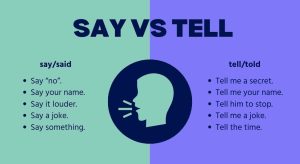
“Say” and “tell” are both verbs we use for communication. “Say” focuses on the words spoken. “Tell” needs someone to receive the info.

The present perfect tense form combines “have” or “has” with the past participle of a verb. It shows actions that are finished in the present.

Gerunds end in “-ing” and act like nouns. For example, “Swimming is fun.” Infinitives are the basic form of a verb and start with “to”.

Comparative adjectives show the difference between two things (like faster). Superlative adjectives help us see who’s at the top or bottom.

Today, we explore sentence structures, which range from simple to compound-complex. Sentence structures come in four main types.

A prefix comes before the root of the word like the “un-” in “unhappy”. Suffixes go at the end like “playful,” where “-ful” goes at the end.

Quantifiers help us talk about how much of something we have. With uncountable nouns, like water, we use words like “much” and “some”.
Pronouns are like shortcuts in language, helping us avoid repeating nouns. They come in various types. Here are the 8 types of pronouns.

Conditional sentences follow a structure that combines a condition clause (using “if”). Learn the conditional types (zero, 1st, 2nd, and 3rd)
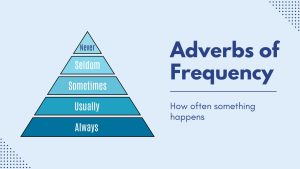
Adverbs of frequency tell us how often something happens. Words like “always,” “sometimes,” and “never” tell us how regularly actions occur.