Quantifiers with Uncountable Nouns
Quantifiers help us talk about how much of something we have. With uncountable nouns, like water, we use words like “much” and “some”.


Quantifiers help us talk about how much of something we have. With uncountable nouns, like water, we use words like “much” and “some”.
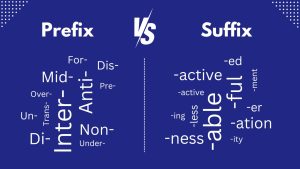
A prefix comes before the root of the word like the “un-” in “unhappy”. Suffixes go at the end like “playful,” where “-ful” goes at the end.

Today, we explore sentence structures, which range from simple to compound-complex. Sentence structures come in four main types.

Commas in English are like tiny breaks in a sentence, guiding readers through words. While often overlooked, commas play big roles.

Nouns are the building blocks of language. They name everything: people, places, and ideas. Let’s look at the eight types of nouns.

Contractions are short ways of writing two words as one. For example, “don’t” is short for “do not”. They make sentences sound more natural.

Adjectives follow a particular order. In this guide, we’ll explore the rules that help you place adjectives in the perfect order.

What is an interjection? An interjection is a word we use to express emotions. For example, “Wow!” shows surprise or excitement.

“In,” “on,” and “at” are prepositions of time. Each one helps describe time and place to know exactly when and where things happen.
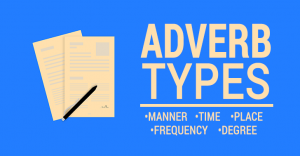
As with all adverbs, they tell us more about the verb. There are 5 different types of adverbs (time, frequency, manner, place, and degree).